Russ Nelson's blog
[
Home
|
RSS 2.0
|
ATOM 1.0
]
Thu, 27 Apr 2006
Elliot Spitzer proposes to save us from "gouging" gas stations.
The trouble is that he is interfering in markets with NO CLUE
about economics. Here we have a case of the blind leading the deaf. The
deaf person can see perfectly fine the automobile heading towards
them, but the blind person, thinking the deaf person doesn't
understand that the blind person is leading him, grasps all the
harder.
The problem can be clearly seen in this quote (also here):
"Spitzer said the stations increased their at-the-pump prices by 25 to
75 percent for gas already in their holding facilities." Once you've
purchased something, do you really care how much it cost? If you've
purchased it for use value, you only care if you are considering
buying another, at which point you decide if the value you've gotten
is worth the price of the new one (not the first one you bought). If
you've purchased it for resale, you only care how much the next tanker
will cost.
Let me repeat that, since it's central: Gasoline retailers really
don't care how much they paid for gasoline. They'd like to make a
profit, but even more than that, they want to stay in business. That
means that no matter how much they paid, they're going to charge
enough to cover the next delivery. That's why gasoline prices tend to
shoot up, and drop slowly.
So, Elliot Spitzer is being purely evil when he pursues a case like
this. Why? Because he is doing so not because winning the case will
make NY a better place to live. He is bringing this lawsuit to pander
to the base instincts of the voting public. He wants to be seen as
"Having Done Something About High Gas Prices."
If Elliot were truly a leader, he would publicly refuse to enforce
this law. He would take the time to educate all New Yorkers of the
foolishness of a law like this. If that be political suicide, better
to die an honorable death. "I regret that I have but one political
career to give to my country." is a sentiment that more politicians
should express.
I encourage you to vote against Elliot Spitzer in the New York
State Governor's race.
posted at: 03:55 |
path: /economics |
permanent link to this entry
Mon, 24 Apr 2006
I was an invited speaker at DORS/CLUC (Open Source group / Linux
Users group) in Zagreb, Croatia last week. I was speaking on "Why are
there so many open source licenses?" I think I did a good job on the
talk. I noticed a few people yawning with ten minutes to go, but
that's more likely due to the subject matter than my presentation of
it. Left ten minutes for questions and went out to sixteen minutes
with three questioners, so clearly there was some enthusiasm.
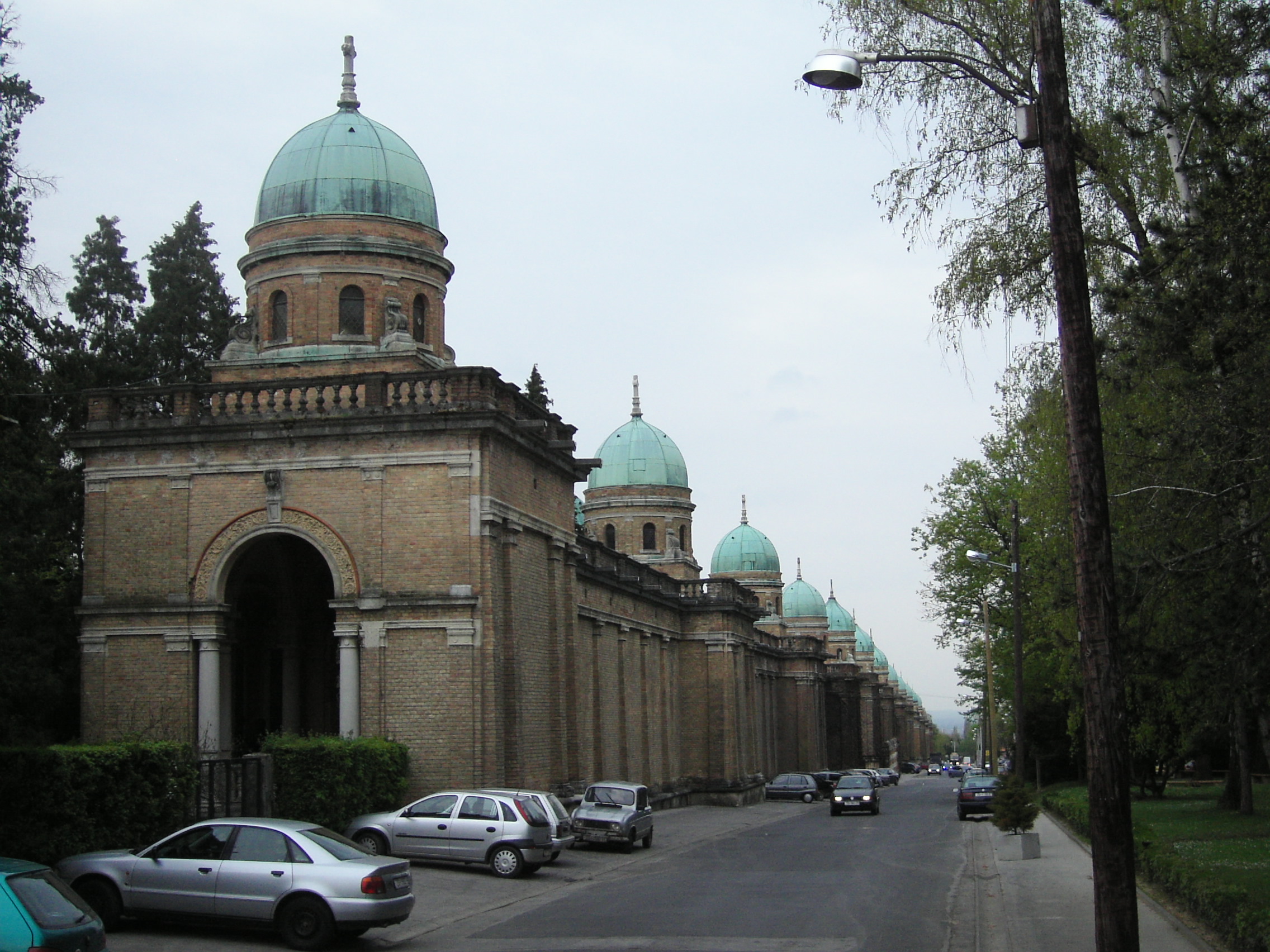
Went geocaching in Mirogoj
Cemetary. It's a really big cemetary. This wall traverses the
length of it:
 .
.
Found the Norwegian
Embassy while wandering
around:
 .
.
Tuesday night on the way back from dinner we walked past the nicely
lit Cathedral of Marijina Uznesenja. Took a three-second time
exposure of it:
 .
.
During the day:
 .
.
Wednesday night we ate the penguin. It was a little creepy to be
eating the body of our mascot. Too much symbolism there for me,
particularly in a Catholic country.
Kristijan:
 .
.
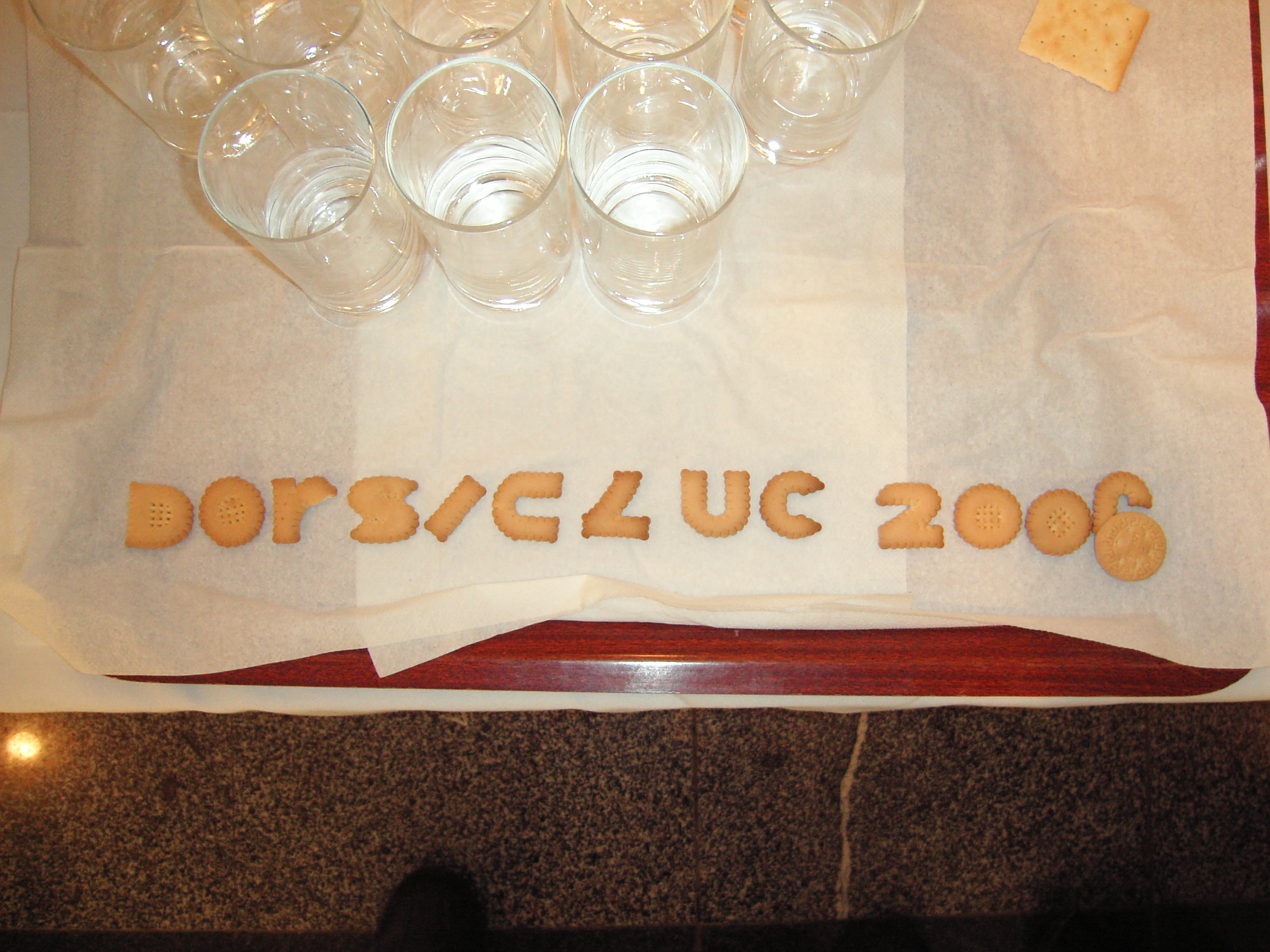
They served animal crackers shaped like letters at the breaks. I
noticed that there were enough letters to spell out the name of the
conference (Vlatka suggested the upside-down 7 as an L, and the
totally forged 6):
 .
.
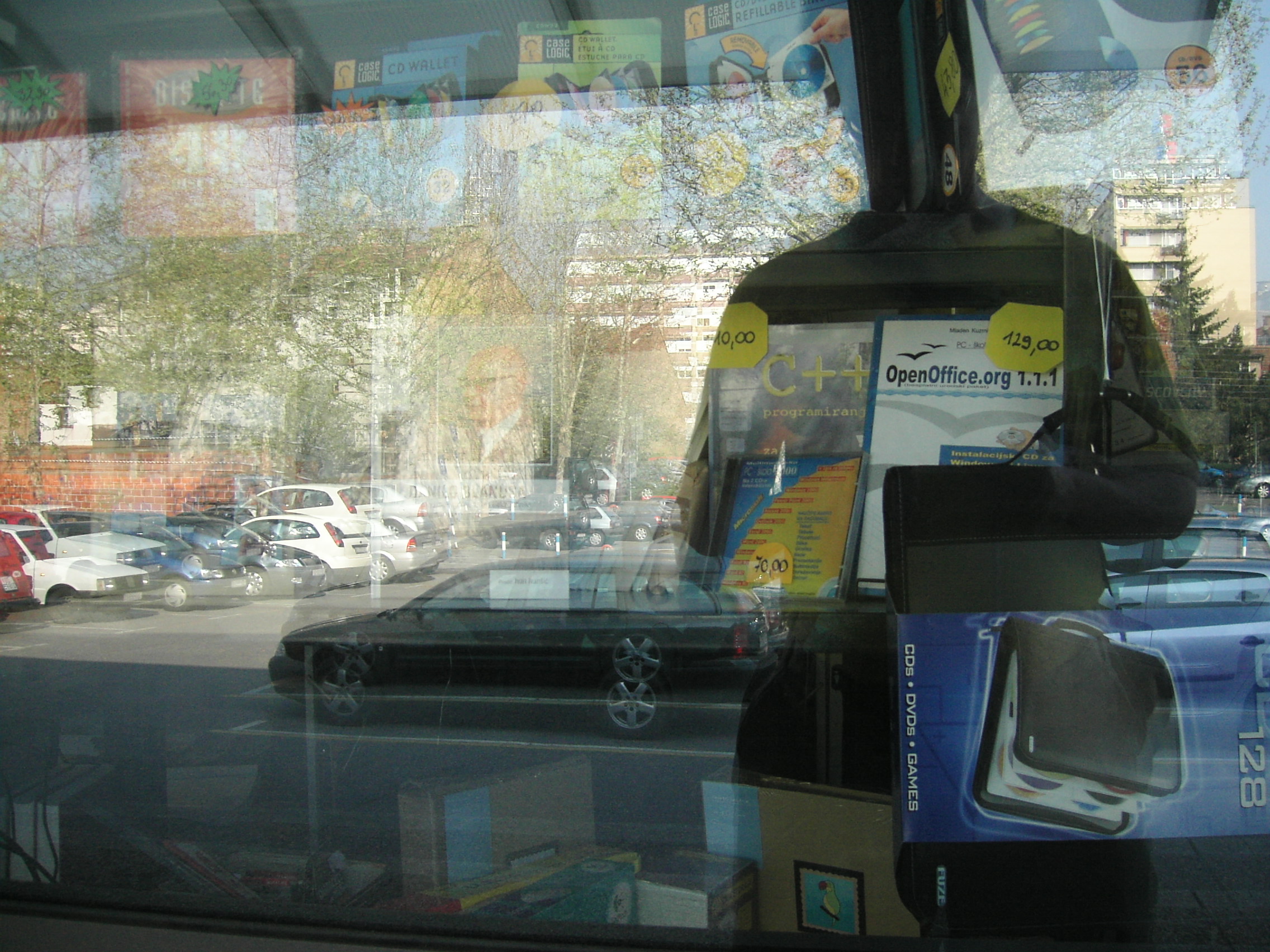
You can buy Open Office off the shelf at FER:
 .
.
posted at: 20:12 |
path: /opensource |
permanent link to this entry
Fri, 14 Apr 2006
Been spending a few evenings this past week working on the Rutland Trail. There's a few
sections which are perennially wet. Not just damp wet, or even soft
wet. We're talking "standing water" wet. The worst puddle is about
30' long, and 12" deep. Threatens to overwhelm my boots.
The primary cause of these puddles is blocked drainage ditches.
Sometimes the people who cleared the ties were careless, and allowed
the tie to lie in the bottom of the ditch. Sometimes trees have grown
up in the ditches, and their roots collect leaves, twigs, and dirt.
Sometimes people have created farm crossings without regard of the
need for drainage.
The problem with ATVs is the same problem that hikers face. Once a
trail stays even a little bit wet, the soil gets soft and sticky. It
sticks to the bottom of hiker's boots (or ATV tires) and gets carried
away. As the wet soil is removed, a lower spot is created. This
accumulates more water and the process goes around again. There are
only two solutions: stay off the trails when they're wet, or dry out
the trail.
Hiking trails tend to be sloped, and so removing water from the
trail is a simple matter of inserting a water bar. This acts as a dam
to channel the water off the trail. Where hiking trails are flat,
it's hard to dry them out. There is no natural mechanism for removing
the water. Not so on a railbed converted to a trail. A railroad also
needed to keep the railbed dry, so they put ditches on the sides of
the track, to remove water. Drying out a rail-trail is simply a
matter of maintaining these existing ditches.
So I dug lots of leaves and sticks out of ditches this week. Found
a tie in one, which I was able to pry out with a prybar (as one would
expect a prybar to be used). Once I could get a hand-hold, I was able
to shift it. Not so for another tie. It had been used as a farm
crossing, and had gotten quite a covering of dirt. Even after I
shoveled the dirt off, I couldn't shift it. Got the chain with a grab
hook, and a slip hook, and the come-along, and moved that puppy out of
the way. So now four puddles are draining into the ditch, instead of
accumulating water and eroding the trail as one puddle drained into
another.
Next puddle to go is the worst one. It'll be a supreme pleasure to
dry that one out.
posted at: 05:44 |
path: /railroads |
permanent link to this entry
Wed, 12 Apr 2006
20.68 km 67851.78 feet 12.85 mi
4772.00 seconds 79.53 minutes 1.33 hours 9.69 mi/hr
Went for my first ride on the Rutland. Rode on the worst possible
section in the springtime -- the one with all the puddles. Came back
later and drained one of them. I noticed why this section is so muddy.
There are two ATV entrances blocking the drainage ditches, and one
farm crossing. I'm going to pull them out. The only question is whether
I can do it by hand, or if I need a backhoe. I'm gonna see if I can
borrow one of my neighbor's.

posted at: 03:08 |
path: /bicycling |
permanent link to this entry
Tue, 11 Apr 2006
Went for a hike exploring the Brooklyn
Cooperage logging railroad line into Everton.
They pulled the tracks up in the 1920's, so it hasn't been so very
many years. I found the location of the curve
at Everton. The railroad is drawn as crossing the St. Regis River
and recrossing it a short distance thereafter. That's certainly
possible. There's not too much room between the road and the river at
that point. Neither, though, did I see any sign of bridge abutments.
If it was a wooden trestle bridge, it may not have had abutments.
Also found evidence of a side track north from the curve. Tie
impressions, and grading. If it existed at all, it was probably just
for one year, while they were logging in the area. Some time in the
late 1980's I saw evidence of ties.
Further out on the rail line, it crosses Mile Brook. You can still see some remains in the wetland here:
 .
.
I hiked north along the railbed, and found another
branch crossing Mile Brook. The line to the left continues
northwards. The line to the right is still used as a path across the
wetland:
 .
.
The best part, though, is that I
found
rails!. I have no idea why a pair of rails would have been left
behind:
 . This
wasn't the last place that Brooklyn Cooperage had a logging railroad,
so something must have prevented them from removing those rails.
. This
wasn't the last place that Brooklyn Cooperage had a logging railroad,
so something must have prevented them from removing those rails.
Kept walking out on the railbed. Except for a few muddy places
where some vehicle dug nasty holes at some time in the past, the
railbed is still in reasonable condition. I think I found the end of
the northwest branch, because there's no sign of the railbed past that
point.
posted at: 20:19 |
path: /railroads |
permanent link to this entry

 .
. .
. .
. .
. .
. .
. .
.

